
The word “trauma-informed” gets used a lot these days. On websites, in bios, on Instagram captions next to pictures of sunrise yoga.
So let me tell you what it actually means — at least, what it means in the way I work.
It means I’m not coming to this from a textbook alone. I’ve lived a version of what you’re describing. The anxiety that runs quietly underneath everything. The exhaustion that doesn’t shift. The appointments where you leave feeling like you’ve been processed rather than heard. The years of managing yourself through the day and calling it fine.
I know what it feels like to sit across from someone and wonder if they actually get it — or if they’re just nodding in the right places.
That’s the difference. Not a technique. A person.

So what does a health coach actually do?
A health coach works in the space between knowing and doing.
Most of the women I work with already know the basics. They know sleep matters. They know stress is a problem. They’ve read the articles, tried the apps, possibly done a course or two. The gap isn’t information — it’s that none of it seems to stick, or work, or feel like it was designed for their actual life.
That’s what coaching addresses. Not what you should do in theory, but what’s genuinely getting in the way — and how to work with your body rather than against it.
It’s also worth being clear about what health coaching is not. It isn’t therapy. It isn’t medical treatment. It doesn’t replace your GP or your mental health support. What it does is sit alongside those things — in the gap that most women describe as “I’ve had all the help and I still don’t feel right.”
What makes trauma-informed different
A standard health approach looks at what you’re doing — what you eat, how you sleep, how much you move — and tries to optimise it.
A trauma-informed approach asks a different question first: why is your body responding the way it is?
Because here’s what most health advice misses. If you’ve spent years in a state of chronic stress — if your nervous system has been running on high alert for so long it’s forgotten what off feels like — then the usual recommendations don’t land the way they’re supposed to. You can know that rest is important and still be completely unable to rest. You can understand that stress eating isn’t serving you and still find yourself at the biscuit tin at 3pm on autopilot.
That’s not a willpower problem. That’s a nervous system problem. And it needs a different kind of attention.
Trauma-informed coaching means I understand how stress, burnout, and past experience live in the body — not just the mind. It means we work at a pace that feels safe. It means I’m not going to hand you a meal plan and a morning routine and expect that to fix something that runs much deeper than habits.
It means no shame. No pressure. No sense that you’re somehow doing it wrong.
I’ve sat where you’re sitting. I know how it feels to be trying everything and still not quite getting there. That shapes every conversation I have.
What working together actually looks like
We start with a proper conversation — not an intake form, not a questionnaire. A real conversation about what’s been going on, for how long, and what you’ve already tried.
From there, we work together on the things that are most affecting your daily life. That might be energy, sleep, food behaviour, anxiety, the relentless mental load, the feeling of having lost yourself somewhere along the way. Usually it’s several of those things at once, because they’re connected — and the nervous system is usually the thread running through all of them.
Sessions are private, unhurried, and built around your actual life — not an ideal version of it.
I work with women who’ve tried the conventional route and found it wasn’t enough. Women who’ve been told their bloods are normal. Women who are functioning perfectly well from the outside and exhausted in ways nobody can see.
If that sounds like you, the client stories here might be worth reading — because sometimes the most useful thing is seeing yourself in someone else’s experience.
What it isn’t
It isn’t a quick fix. Anyone who promises you that isn’t being straight with you.
It isn’t about being perfect, or following a protocol, or hitting targets. There are no gold stars for compliance here.
It isn’t therapy — and if therapy is what you need, I’ll tell you that honestly. I work well alongside therapeutic support, and I’d rather be straight with you than take your time and money under false pretences.
What it is, is a space where you’re taken seriously. Where the whole picture gets looked at, not just the presenting symptom. Where the goal isn’t to make you better at coping — it’s to understand what your body has been carrying, and start giving it what it actually needs.
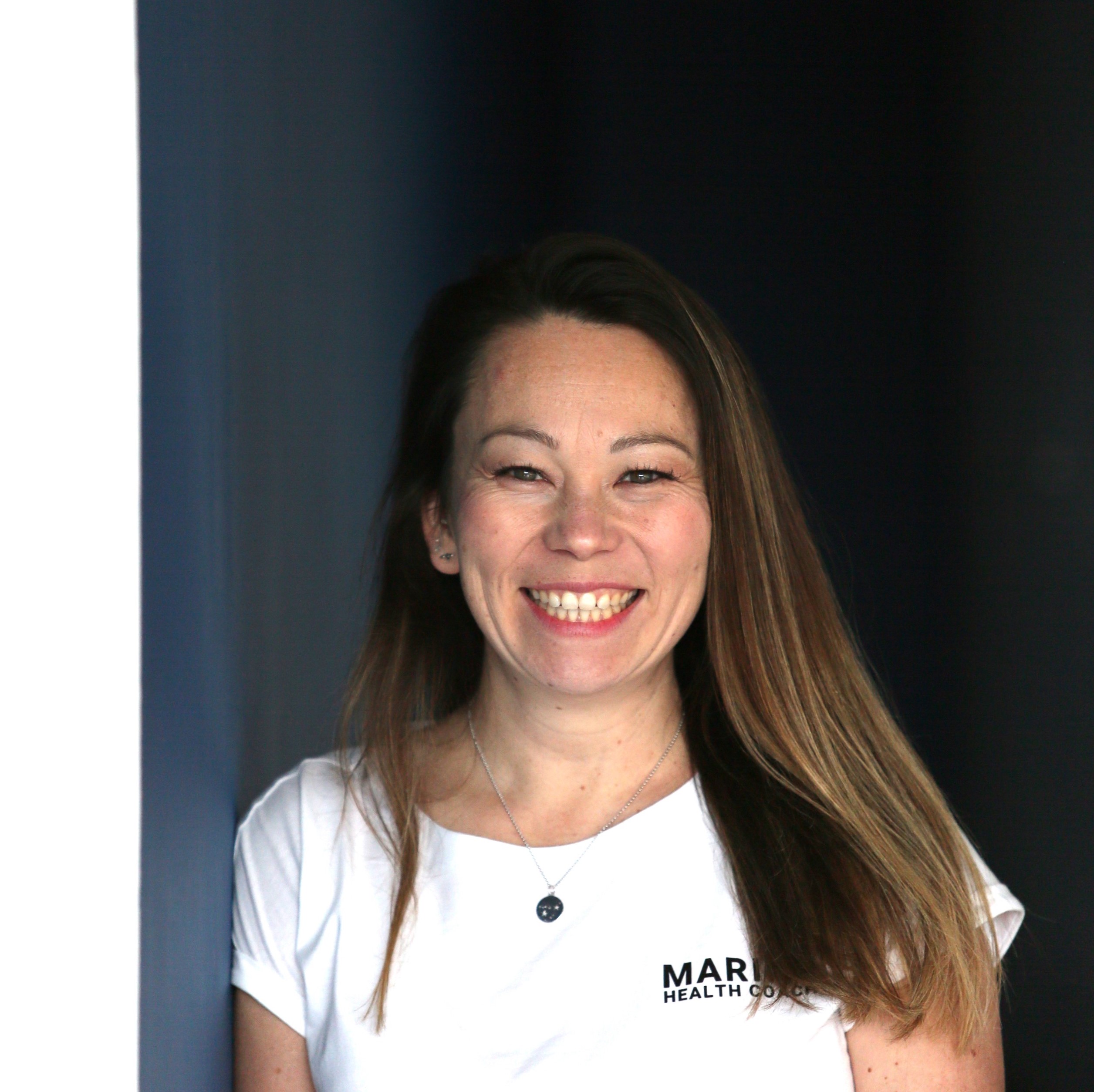
A note on qualifications — because they matter
I hold a CNM Diploma Level 5 in Health Coaching, am NHS-accredited, trauma-informed, and a member of the General Naturopathic Council and the Personalised Care Institute. I’m also a CNM Ambassador.
I mention this not to front-load credentials, but because Harriet — the woman I work with — has usually already been let down by people who seemed credible. She deserves to know that this is a properly qualified, professionally accountable practice. Not a wellness hobby.
Is this right for you?
If you’ve been told everything is fine and you know it isn’t — this might be exactly the right conversation to have.
If you’re exhausted in ways that don’t show up on blood tests, if you’ve tried the obvious things and they haven’t stuck, if you’re ready to look at what’s actually going on rather than manage the symptoms — then yes. This is worth your time.
About the Author
Mariko Broome is a trauma-informed health coach and women’s wellbeing specialist based in Keynsham, near Bath. She works with women who are exhausted in ways that don’t show up on blood tests — helping them understand what their nervous system has been trying to say, and what to do about it.