You’re mid-sentence, making a perfectly good point — and then your mind goes completely blank. The words evaporate. You pause, stare, and laugh it off, but inside you wonder, What’s happening to me?
If that sounds familiar, you’re definitely not alone. For neurodivergent women, perimenopause can amplify everything that was once manageable. Focus, memory, mood, and motivation can all feel like they’ve been thrown into a hormonal blender.
As Dr Ellen Littman, clinical psychologist, puts it:
“For women with ADHD, perimenopause can feel like losing a life jacket that was already half-inflated.”
My Brain Has Always Been Busy
I grew up thinking everyone’s mind buzzed like popcorn — full of ideas, projects, and plans. I wanted to try everything.
As a kid, I was constantly in motion: one belt off a black belt in karate, competing nationally in trampolining, representing my borough in the London Youth Games, and even touring internationally in aggressive skating — on ramps, doing grinds, chasing adrenaline.
At the time, I didn’t realise that those moments of focus and flow were my brain’s way of finding calm in the chaos. They took me out of my head — away from the constant whirring of thoughts — and gave me the dopamine hits I needed to feel balanced.
Back then, I just thought I was energetic and curious. Now, I can see I was also self-medicating with movement.
Related read: The Modern Motherhood Burnout: Why We’re All So Damn Tired
When Flow Turns Into Fog

Fast-forward a few decades, and something shifted. The clarity I once had started to slip. My motivation dipped, and the mental juggling act I’d always been able to manage suddenly became impossible.
At first, I thought I was just tired. Or distracted. Or lazy (the classic lie so many of us tell ourselves). But when I started learning more about perimenopause — and how it impacts dopamine and serotonin — it all started to make sense.
Oestrogen and progesterone fluctuations can begin as early as our mid-to-late 30s and continue for up to ten years before menopause (NHS, 2023). These hormones don’t just influence our cycles — they directly affect brain chemicals that control focus, mood, and motivation.
When they start to dip, so can our ability to think clearly, regulate emotions, and even feel that spark of excitement that used to come so easily.
A 2023 UK study found that 78% of women with ADHD reported their symptoms intensified during perimenopause, yet over half were never offered appropriate medical support. And for women who haven’t been formally diagnosed but recognise themselves in the traits — creativity, impulsivity, sensory overload, emotional intensity — the overlap can feel overwhelming.
You might also like: When Why You Can’t Seem To Get Anything Done: Understanding Executive Function and Burnout
Why It Feels Like the Rules Have Changed
The British Menopause Society highlights that declining oestrogen levels can cause “brain fog,” forgetfulness, and reduced mental stamina — symptoms that overlap almost perfectly with ADHD.
And when you add a lifetime of adapting, masking, and people-pleasing on top of fluctuating hormones, it’s no wonder so many of us feel like we’re falling apart.
Perimenopause doesn’t just drain your energy — it can strip away the coping mechanisms you’ve relied on for years. The colour-coded planners, the mental checklists, the endless multitasking… suddenly, they don’t work like they used to.
This is where self-blame creeps in. You start wondering, Why can’t I keep up? Why am I so emotional? Why can’t I remember the word for… what’s that thing again?
But here’s the truth: you’re not failing. Your brain is simply recalibrating — adjusting to a new hormonal landscape.
Read next: The Guilt Hangover: Why Rest Feels Wrong (And How We Can Fix It)
The Cost of Holding It All Together
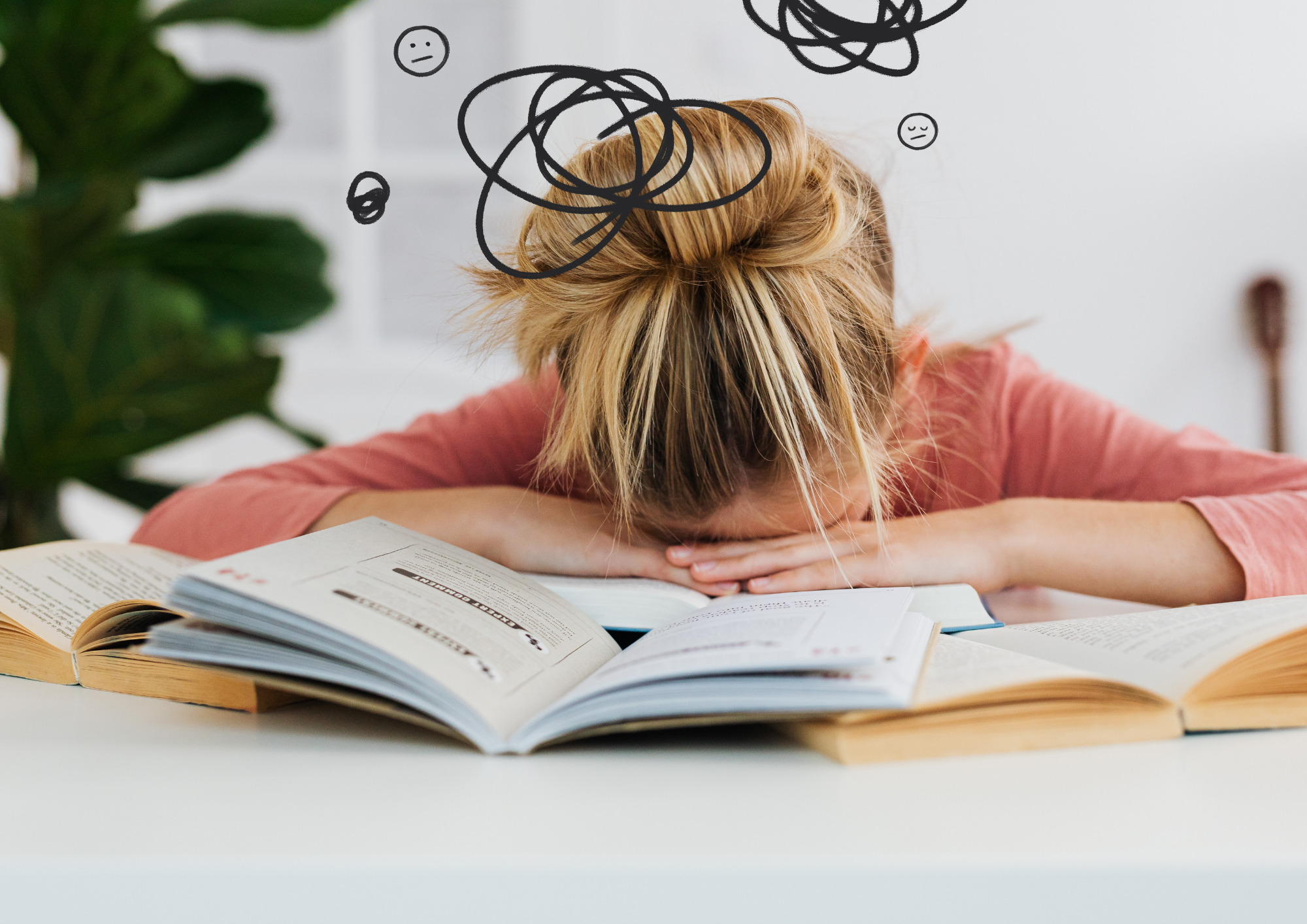
So many neurodivergent women have spent years holding it all together. Performing. Achieving. Caring for everyone else while ignoring their own needs.
And for a long time, that worked — until it didn’t.
Perimenopause can make the emotional load feel heavier and the world louder. Masking becomes exhausting. The noise, the light, the small talk — it all starts to grate. The tolerance you once had just… evaporates.
But maybe that’s not such a bad thing. Maybe this stage is your body’s way of saying, no more over-functioning, no more pretending, no more performing. It’s asking you to rebuild your life in a way that feels sustainable and real.
What Helps (and What’s Helped Me)
This stage of life doesn’t have to feel like chaos — it’s simply a transition. And with the right support, things can feel lighter again.
Here are a few things that make a real difference for both hormone balance and a neurodivergent brain:
But most importantly? Be kind to yourself. You can’t “outplan” a hormonal shift — but you can work with it, not against it.
A New Season, Not a Setback
When hormones and neurodivergence intertwine, it can feel like the rules have changed overnight. But what if it’s not a breakdown — it’s a breakthrough?
You’re not meant to keep running at the same speed forever. You’re meant to evolve. This is the moment your body and mind are asking you to slow down, listen, and rebuild in a way that feels right for you.
References
ADDitude Magazine (2023) ADHD and Perimenopause: When Hormones Affect Focus, Energy, and Emotion. Available at: https://www.additudemag.com
(Accessed: 19 October 2025).
British Menopause Society (2023) Cognitive symptoms and brain fog in perimenopause and menopause. Available at: https://thebms.org.uk
(Accessed: 19 October 2025).
Littman, E. (2020) For women with ADHD, perimenopause can feel like losing a life jacket that was already half-inflated. Quoted in: ADDitude Magazine. Available at: https://www.additudemag.com
(Accessed: 19 October 2025).
Nadeau, K. (2020) Hormones and ADHD in Women: Understanding the Midlife Shift. ADDitude Magazine. Available at: https://www.additudemag.com
(Accessed: 19 October 2025).
NHS (2023) Perimenopause and menopause overview. National Health Service. Available at: https://www.nhs.uk/conditions/menopause/
(Accessed: 19 October 2025).
University of Surrey (2023) ADHD symptoms and perimenopause: An exploratory study on women’s experiences. Guildford: University of Surrey.
About the Author
Mariko Broome is a trauma-informed transformational health coach and women’s wellbeing advocate.
Through her workshops, writing, and coaching, she helps women heal burnout, realign with their purpose, and create sustainable calm — one real step at a time.